19
Just in time for the holidays, Media Whiz's Text Link Ads launched a new links product named InLinks, which puts text links inside the content of sites powered by Wordpress, MovableType, and Drupal. Rather than links sticking out like a sore thumb by putting a rail of paid links in the sidebar or footer (the old text link brokering model) this allows for a more efficient marketplace that is more likely to pass link juice and be a bit harder to detect.
Link Location Matters
Yahoo! Search's Priyank Garg highlighted that they look at link location when determining the value of links:
The irrelevant links at the bottom of a page, which will not be as valuable for a user, don’t add to the quality of the user experience, so we don’t account for those in our ranking. All of those links might still be useful for crawl discovery, but they won’t support the ranking.
As Jim Boykin would say, you want links within content linking to content.
Does Google Like This?
Matt Cutts was quick to say that this link buying program violates Google's TOS (and might be against an FTC guideline), but Shoemoney highlighted how Google is known to look the other was on such decisions when it is profitable to do so.
Every time paid links is brought up Matt Cutts brings up the FTC’s “suggestions” on bloggers disclosing things they have been compensated for. In no where in these “suggestions” does it talk about paid links. But even if it did they are just suggestions. They are not law and if Google was following the FTC’s suggestions I doubt Google Adsense/adlinks would be engaging in some of the most deceptive advertising methods I have ever seen on the internet.
- Google promotes infidelity.
- When Google launched their affiliate program, you could only tell that the blended inline text links were affiliate if you read a small blurb when you scrolled over them.
- Some AdSense ad units do not even have the word ad near them...one commenter thought people could think a blog was promoting/endorsing homosexual fitness dating because there was no disclosure.
- This entire page is a Google advertisement with no disclaimer on it
It appears Google needs to clean up its own act before people will take that FTC comment seriously.
Should You Buy Text Links?
Quoting liberally from Bob Massa's great blog post on link buying:Invariably I get the question, SHOULD I BUY LINKS?Read more of Bob's wisdom at Should You Buy Links? The Truth Shall Set You Free
Wanna know the funny thing? Most of the people who ask me that question are the people who least need to worry about the risk. The risk motivating the question being whether or not they may be penalized by google instead of the risk being about going broke.
Logic would dictate that anyone concerned about the risk of being penalized by Google, is actually worried about losing something they already have. In this case sales coming from targeted traffic generated from superior organic placements in the SERP’s. Fine, that makes sense as that is pretty much the definition of risk. Losing what you already have or at least losing a perceived opportunity that you have already made an investment in, (which was a calculated risk the minute a decision was made to put up a webpage and long before this question ever came up).
But far more often than not, when I take a look at the site belonging to the askee, I see a site that looks like a third graders ransom note and written by a Marlon Sanders school of “But Wait – There’s More” drop out with a title tag that reads, index-Mozilla Firefox.
Little traffic to speak of and certainly no sales to lose. There is VERY little visible investment in design, content or anything else. Yet they brag of the #3 spot they have for a keyword with over a million results like that is all they need for proof of their valuable contribution to the world of online commerce.
How to Buy Links Safely
I spoke to some folks at Text Link Ads who said that the InLinks inventory is separate from their traditional old-school link inventory.
Is this new network on Google's radar? Absolutely, but then what did Google expect when they only penalized one link broker while letting all the others rank? In doing so, Google made their fighting paid links program much more difficult to manage.
Might they catch some publishers? Sure, especially if they are greedy, aggressive, and use little to no editorial oversight. But some will do it smartly, and for most advertisers the risk is minimal so long as you use it lightly...many of these sites are well ingrained into the web, with thousands of legitimate inbound and outbound links.
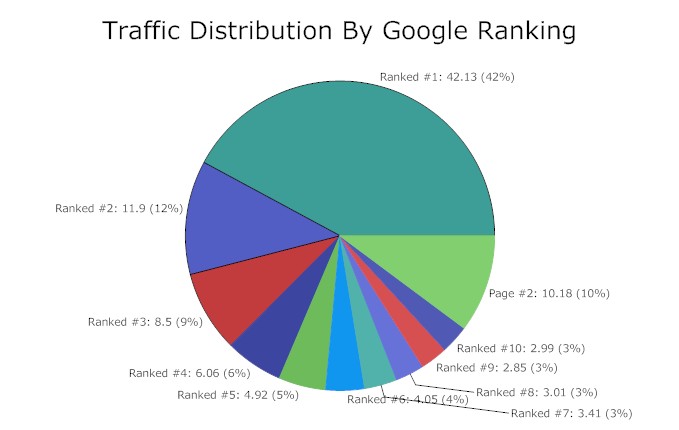
Most search traffic goes to the top few ranking results. I wouldn't use this type of linking program to try to go from #103 to the first page, but if you are ranking #8 or #12, buying a few of these links might be all you need to capture a profitable top Google ranking.
Save $100 Today
Join inLinks and get $100 off your order by using the code 100free. Try it out, see if you like it, see if it works for you, and cancel if you don't see the movements you were expecting.
Subscribe to our blog via email or RSS to get more great posts like this one.
comments
Login or Register to post comments.
Why not offer us a tool where we can disclose our paid links in Webmaster Central?
As newportseo's link shows, it would be easy to sign up to inlinks as one of your competitors, spend $10 (or whatever the minimum is), then report the link to Google a week later saying you think it's a bit shady, it might be a paid link. What do Google do? Ban your competitor?
How can Google know exactly WHO has commissioned such links? That is the key question. It's not that a link simply exists that was paid for, but WHO paid for it. When links are cheap (and they are), then it's profitable to watch your competitor's rankings slide as you frame them with paid links.
I can't stress this enough: it's not enough for Google to recognise a paid link, they need to confirm (beyond all doubt) WHO paid for it. It would be far worse to penalise sites for paid links that the owner didn't actually pay for (a competitor did) than leave them alone.
I wonder how Matt Cutts would explain how Google knows who paid for a link.
This act of TLA has suddenly started a kinda debate among top pro-bloggers. Some are in favor some not!
...this allows for a more efficient marketplace that is more likely to pass link juice and be a bit harder to detect.
It seems it has more to do with passing link juice, than actually getting a visitor to a site.
My only concern is that an advertiser will have little or no control over the sites that will contain the links.
Of course if you are not an Adsense publisher, this is a new mean of testing various ways of making money from your blog/site.
Of course if you are not an Adsense publisher, this is a new mean of testing various ways of making money from your blog/site.
If I had to guess this will skew Google toward placing even less trust on fairly new links on low PageRank blog entries...this way the advertiser would be forced to eat a good bit of cost before seeing return. But other blog link networks like Blogsvertise clearly work still...so this battle might have a bit to play out.
From the Techcrunch article there's some interesting links regarding ads not being advertised as ads, might be worth a read for UK SEO's:
http://www.opsi.gov.uk/si/si2008/uksi_20081277_en_5#pt11
US SEOs:
http://www.ftc.gov/os/2008/03/P064101tech.pdf
European SEOs:
http://ec.europa.eu/consumers/rights/index_en.htm
Might help inform a few decisions on the law and links.
Does anyone know of anyone that has actually been done by the law (not Google) for not advertising ads as ads online...I just don't see how it could be enforced on any sort of widespread scale...
http://www.seobook.com/in-links-launches


No comments:
Post a Comment