Sunday, December 28, 2008

Why We Are Lucky to be SEOs (article of the week?)

http://www.seobook.com/why-we-are-lucky-be-seos

A Christmas Present for SEOs: 10 Tips to Pick the Low Hanging Fruit

http://www.seomoz.org/blog/a-christmas-present-for-seos-10-tips-to-pick-the-low-hanging-fruit

Twitter Has Made Dell $1 Million In Revenue

http://sphinn.com/story/93931

How to Build a Brand Today - The Future of Your Online Business Depends on It

http://sphinn.com/story/94034

The Ultimate Google Killer

http://www.mediapost.com/publications/?fa=Articles.showArticleHomePage&art_aid=97392

Japanese company releases Sushi guide for the iPhone

http://www.crunchgear.com/2008/12/25/japanese-company-releases-sushi-guide-for-the-iphone/

The Future Of Social Search (Or Why Google Should Buy Facebook)

If you could search your friends’ thoughts, interests, and activities, would that be a better search experience? In many cases, it would be. Searching for restaurants, books, or movies, would turn up recommendations from people you actually know. If you are researching a trip to Florence, Italy, you might discover ten friends who have been there already, and could ask for advice on what to do. These scenarios have been the dream of social search for a few years, with both startups and search engines taking a stab at it. But so far it’s been a failed dream.

Yahoo’s experiment with social search, Yahoo 360, is being shut down. It was a rudimentary social search in that relevant bookmarks from friends showed up as search results. And search has never been Facebook’s strong suit. It handed search over to Microsoft, but the search experience on the site is poor. It is difficult to search much deeper than your friends’ names. You need to go to an advanced profile search page to filter through their interests, activities, or other profile categories, for instance. And forget about searching your news feed.

Yet social search done right could become very valuable for Facebook. And it would be even more valuable for Google. (They already know how to make money from search). It is also an opportunity for Microsoft Live Search, but they are not really inspiring much confidence so far. So let’s set aside for a moment the unlikelihood of any Google-Facebook deal or partnership (given Microsoft’s investment in Facebook), and let’s imagine how the two could help each other.

Even if Facebook/Microsoft figures out social search, it is more useful on Google, which is where most of us do our searching. To get a glimpse at what this might look like, you can try Sidestripe, which is both an add-on widget for Google search and a Facebook app. Sidestripe is like Glue for search (Glue is a browser add-on that shows you whether anyone in your social networks has expressed interest in the book, movie, restaurant, product, or other things mentioned on whatever page you happen to be browsing). Similarly, sidestripe indexes all your friends on Facebook and parts of their profiles (where they work, their interests, etc). When you do a search on Google, a box with Sidestripe results appears after the third natural result, giving you a sense of whether any of your friends might be experts on the topic. For instance, when I do a search for “Google” it turns up Facebook friends who work at Google or are somehow affiliated with Google, and looks like this:

A search for “biking” turns up friends who are interested in biking. You can also add your own knowledge to any search result, and it will appear as a subsequent result (although it does not let you add links, which I consider a major bug). Or if you still can’t find what you are looking for from either Google or Sidestripe, you can ask all of your friends a question from inside the Sidestripe box on Google about the topic you are trying to learn about and that question shows up in all of your friends’ feeds. Any answers then become indexed and searchable.


http://www.techcrunch.com/2008/12/28/the-future-of-social-search-or-why-google-should-buy-facebook/

Tuesday, December 9, 2008

Increase Google Adsense Income with Simple but Effective Tweaks

Increase Google Adsense Income with Simple but Effective Tweaks

Ads by Google
Download Free Keywords

Why pay for Keywords? 6.5 Million Top AdSense keywords for Free! www.KeywordCountry.com

$130+ Daily Potential

Make 10k+ Monthly Following Our Simple Plan MIN Start Up $200.00 iamrichnow.com/

As an experienced Adsense publisher, you know tons of Adsense Optimization tricks that will yeild maximum advertising revenue.

To quickly recap, you know by heart that wide rectangles perform better than banner formats, that Google Ad colors should blend with page background color, that section targeting serves more relevant ads, that border-less Ads convert best, that split testing helps you shortlist the best ad formats, that Google CSE is much better than Adsense for Search.. the list goes on and on.

But what’s the next step when you have experimented with all these Adsense tweaks but the CTRs and eCPM figures are stationary or aren’t moving north as you would like them to? Well, the simple solution is – some more optimization.

1. Turn Low Performing Units into Image Only Ads

Google Image CPM AdsSay you have a skyscraper in your sidebar or a leaderboard at the bottom of the page. It may exhibit a very poor CTR because it’s so out of sight and visitors often tend to miss the ad unit completely.

In that case, an alternative is to use Image Only Ads for that using – Image ads are generally CPM ads so you will generate revenue each time the ad makes an impression. Image ads are also effective in places where the visitors are Adsense publishers themselves and less likely to be interested in clicking your ads.

Use Google Adsense Sandbox to see image and Flash ads that are likely to appear on your web pages for visitors from different countries across the world.

2. Harness the Comments Section of Your Blog

Adsense in Blog Comments When people read a blog, they’ll will first read / scan the main article and then they’ll jump to the comments section.

If they have a question or need more information about the product / service mentioned in the blog post, they’ll either leave a comment or will leave the site search for more resources.

That’s why an ad unit placed in the comment section would immensely help. The visitor is in a mood to search for extra information and the Adsense unit in the comments could have an ad for a product that might appeal to the visitor. The best place for place an ad unit their is immediately under the comment textarea box.

3. Don’t Use Adsense At All

Some Adsense publishers are shy of placing ads in prominent and visible locations on their site thinking that that ads might turn away visitors. So they will put ads in some corner hoping that visitors will still find them.

Think from the perspective of Adwords advertisers who are renting space on your blog with the hope of getting prospective customers. Why would they be willing to invest in your site (by buying ads) when they are not getting the expected returns. If you want advertisers to bid on your site, it is advisable that you place ads above the page fold else don’t use Adsene at all.

4. Sell Your Website to Adsense Advertisers using Channels

Sell Site to Advertisers You can use Adsense channels to convince potential advertisers as to why they should advertise on your site.

When you create a custom channel in Adsense, edit the channel settings and allow Targeting. Then type a marketing pitch – tell your advertisers about your site, where the ads will appear and why should they advertise on your site. Believe me, this works.

5. When Nothing Works, Put One at the Top

Thanks to tabbed browsers like Firefox, IE or Opera – a horizontal ad unit placed at the top of your web page can perform quite well because visitors often notice the areas near the browser tabs.

Whether they are planning to exit your web page by pushing the close button of the current tab or cycling to another browser tab, chances are high that your ad near the tab bar will get noticed. See implementations at Statcounter and Digital Point forums.

statcounter adsense digitalpoint

6. Avoid Using Common Blog Words

As far as possible, do not use the common jargon like “feeds”, “RSS”, “blog”, “XML”, etc as that might result in RSS and blog related ads even when your website belongs to a different niche.

You can again use section targeting to suggest Adsense bots to ignore the blocks of text that have irrelevant words.

7. Pick Only High Paying Adsense Referrals

adsense referrals text links Adsense for Referrals can be a good source of revenue if you spend some time picking the best products that may be relevant to your audience. For instance, I pick products related to Software, Video and Internet for this blog and allow Adsense to pick the best product automatically.

Adsense referral payments can vary from few cents to couple of dollars. For example, a newsletter signup may fetch you 5 cents while if someone signs up for Lulu, you may get $10.

I recommend using referral products that give a high return – the conversion ratio may be low but the since the gain per conversion is very high, you will have more revenue overall. One conversion for a high paying referral is much better than several small referrals put together. You can also considering highlighting referrals with a custom FONT tag.

Any Questions ?

If you have any questions / concerns related to Adsense, please post them in the Online Monetization forums.

Ads by Google
Free Ads

Get Top Spot on your Pay-Per-Click Ads FREE. rich-money-maker.blogspot.com

$2500/Day Guaranteed

Make Money 100% on Autopilot ! Step-by-Step Instructions - $4.95 www.ForexAutoMoney.com

Find this article at: http://labnol.blogspot.com/2007/08/increase-google-adsense-income-with.html

web: http://www.labnol.org/ email: amit@labnol.org

Reader Comments

Great tips Amit. Time for me to work on some optimization.

Hi Amit,
Good tips but according to adsense policy adsense near forms are absolutely NO NO according to google. Any reason why this tip ?

Hi Amit,
Its really valuable information.I 'll try to use it..

Really valuable tips.
But, Amit sir Is it possible to harness the comments section as mentioned in the post in Blogger?

Hi Amit,
thanks for the valuable information.Can you also list down some more refferal ads which you feel are high paying ads.


http://labnol.blogspot.com/2007/08/increase-google-adsense-income-with.html

Wednesday, November 26, 2008

20 Linkbaiting Techniques

20 Linkbaiting Techniques

Miscellaneous Blog Tips 66 comments

As I’ve mentioned numerous times already in this series on linkbaiting - ‘linkbait’ is a term that is used to describe a variety of practices that have the purpose of generating links to your site.

It is impossible to come up with a definitive list of what these practices are as they are only limited to the imagination of website and blog owners.

Below I outline 20 of the more common linkbaiting techniques that I’ve seen (and used).

A couple of things first:

  • Please note that in describing them I don’t necessarily endorse them all. It’s worth saying up front that like many aspects of the web, the tactics that people use vary quite a bit in terms of what they see as ethical or acceptable behaviour.
  • Also note that some people use these techniques with the motivation of getting links where as others do them without such motivation. While they are described by some as linkbait many of them are just activities that bloggers and webmasters use in their day to day work.

Here are 20 linkbaiting techniques that are commonly used (please note - points in the following list are not mutually exclusive, there is overlap between many of them).

  1. Tools - give other website owners a useful, fun or cool tool that they can use on their blog that points back to your own. A prime example of this was the blog worth tool that Dane from Business Opportunities developed that tells how much a blog is worth based on Technorati’s API (used by thousands of bloggers (google shows 27,000+ links pointing to it) - most of whom posted the button that the tool provides (with a link back to his blog).
  2. Quizzes - quizzes, surveys and tests have long been popular with web users and if you’re smart about the way you design them (giving people a button to place on their site for example) they can be quite viral. I ran my recent ProBlogger quiz as a quick test of a plugin and saw it bring in quite a few links - if I’d given participants a button and given it some more thought it would have been even more successful).
  3. Contests - organise something for people to participate in and you’ll find that some will. Add a competitive element to it and offer a worthwhile prize and you might just find the participation rate increases. My recent group writing projects (with prizes) is an illustration of this (although they’re not strictly competitions). Over 300 people submitted entries in my lists project and in the current one there’s already 150+, most of whom linked back to ProBlogger to show their participation (even though I didn’t make it compulsory to do so).
  4. Be First - if you’re the first in your niche to do, say or be something you’re likely to be linked to heavily by others in your niche. Being second, third, forth…. in your niche to do, say or be something will generally have less impact. For example take a look at the success of the Million Dollar Homepage in contrast to the main thousands of copycat pixel advertising sites that followed. Another example was the One Red Paperclip guy.
  5. Scoops - related to being first is breaking a story in your niche. Break a big enough story and the amount of others that link to you giving you credit for being the source of their own news posts can be quite massive.
  6. Exposé - similarly - expose a fraud or scammer and you can create a real buzz around your blog and become part of the news itself. I’m sure there are a few political bloggers out there that would identify their ‘big break’ as exposé blogging when they exposed one politician or another of doing or saying something that showed them for what they’re worth.
  7. Awards - At the beginning and end of every year in blogging circles a silly season of awards happens (last year there were so many that I created ProBlogger’s Awards for Blog Awards). While not all awards work well, many do particularly well at generating a buzz (with lots of traffic and lots of incoming links). They do it on a number of levels. In the first part they generate links from those hoping to be nominated - then they generate links from people who have been nominated who try to get votes - then they generate links from winners showing off and others complaining about the winners…. the waves of incoming links to a good awards can be quite fascinating to watch.
  8. Lists - I’ve written extensively on lists before so won’t go into it in much detail - but of late many examples of blog posts that seem to get a lot of link attention are very list oriented pieces. There is just something about a list that people latch onto, digest and want to pass on to others (just check out digg and delicious and you’ll see plenty of examples). Of course these days list posts are a dime a dozen so you’ll need to make your list useful and stand out in some way. If you do (and you have a little luck) you’ll be well on the way to being linked to.
  9. Humor - some of the best linkbait that I’ve seen has a humorous edge to it. Whether it be a cartoon (Hugh does this well - I’ve seen his blog linked to numerous time today alone), a funny photo, a story or even a title that gets a laugh - people enjoy humor and like to pass it on (it’s something we’ve been doing for centuries in the stories/jokes we tell).
  10. Make someone famous - I’m still trying to get my head around this one but one of the reasons why I think my group projects seem to do well is that they offer people the opportunity the chance of being discovered (of course the prizes help - but some people feed back to me that the main reason they participate is the traffic and incoming links that it can potentially bring). Another example of this is BlogTopSites.com (and other sites like it) which rank pages in different categories. I suspect that a lot of people participate in these sites (and link to them) because they want to see how they rank with other blogs and have hopes of climbing the rankings.
  11. Create belonging/community - people like to belong and they desire community. Give them a place where they do have community (or at least feel that they have it) and they’ll quite often link to it from their blogs. For example, I find here at ProBlogger that people quite often link to the comments sections of my posts (more specifically to comment threads that they themselves have participated in) rather than the post itself. I also see this illustrated by a lot of bloggers who participate in (and link to) discussion forums.
  12. Design - those people clever enough to design something that others use in large numbers can do quite well out of it in terms of incoming links. For example a good blog theme/template (with an inbuilt link to it’s designer) that is picked up and used widely can create an avalanche of incoming links. I’ve seen a number of designers who have had their work picked up as default themes at WordPress.com comment upon the many many thousands of links that this brought them.
  13. Rants - there is something about a well written, well argued and passionate rant that is very link worthy. People get stirred up when you get passionate and the links will often flow as a result. Of course when you write a rant you need to expect that people will react both positively and negatively (and there is often fallout).
  14. Controversy - similarly, controversial posts tend to get strong reactions from those reading your posts. I discovered this very early in my blogging when I innocently wrote a short piece with some of my thoughts on the Iraq war on a Christian blog I was running at the time. I didn’t expect any reaction and was surprised to wake up the following morning to find it had caused a massive stir in the ‘God Blog’ community with hundreds of bloggers linking up either to support or criticise what I’d written. Again - controversy brings in all kinds of responses. Don’t do it just for the sake of being controversial unless you have very thick skin!
  15. Attack - while we’re talking about controversy - another common way to get attention for yourself is to pick a fight with another blogger in the hope of tempting them (and others) to ‘bite’ back. I’ve seen this approach get a number of emerging bloggers on the map in the past 12 months - but would warn those wanting to give it a go that there can be significant fallout from the approach and that you’ll want to consider whether you want to build your reputation around your snarkyness or some other characteristic. If you’re going to build a blog purely on snark you need to be ready for the snark to come back at you and should realize that it’s difficult to sustain.
  16. Shock - ok, I’m obviously pooling these together but using shock tactics is yet another linkbaiting technique that some people use quite effectively. People have been doing this for years in other mediums (’shock jocks’ in Radio for example) so it is no wonder that they’re doing it on the web as well. Shocking via language, extreme views, showing controversial or titillating pictures or video etc all fall into this category. Once again, I’m not really into this type of blogging and wouldn’t want to build a reputation around it - but it’s definitely a tactic that some use with real effect.
  17. Research and Statistics - researching a topic that has popularity and that people can use in some way is another effective way to generate incoming links. While it’s may not be strictly research - Dave Sifry’s periodic ‘state of the blogosphere‘ posts are widely linked to and quoted from because he is presenting interesting statistics that directly apply to something people are passionate about.
  18. Give something away - think about the buzz that Oprah created when she gave every audience member a car a couple of years back and you see the power of what happens when you give something away. While giving every reader you have an extravagant gift like that might not be possible - the clever giving of gifts can definitely create a buzz.
  19. Usefulness - writing something ‘useful’ is a pretty general thing to say (and would be incorporated above in many places) however I think it’s worth saying. The more useful your content is to people the more likely they are to want to pass it on to others. Show someone how to do something, give them knowledge, entertain them and/or improve their lives and/or be better at something and you’ll be amazed at how they’ll rave about you.
  20. Cool Factor - as I look at what seems to get linked to by bloggers I’d say that a fair proportion of it isn’t particularly ‘useful’ (or anything else in this list) - it’s just ‘cool’. Of course ‘coolness’ is difficult to define or achieve (it seems to just happen) but if you are cool (or do something that is) you might just find yourself getting linked up to.

Like I said in my introductory paragraphs - a definitive list of linkbaiting techniques (and examples) is impossible to achieve. The above 20 types of linkbait are just the beginning of the ways that bloggers get links from other sites (sometimes they do it intentionally with the motivation to get links and sometimes its just byproduct). I’d love to hear your suggestions on linkbaiting techniques that you’ve seen used (or used yourself). Feel free to give an example or two also.


http://www.problogger.net/archives/2006/09/21/20-linkbaiting-techniqes/

How to Build Authority Links (including .edu .gov .mil)

Posted by Saad as Featured, Link Building, SEO Tips

How to Build Authority LinksAfter I wrote a comprehensive Link Building Tutorial, I got few emails from my readers and I noticed a common trend in their questions. Majority of them wanted to know How to Build authority Links without buying them?

So I thought rather than replying to each of them individually, I’d just put it up a short answer here in my blog so that everyone else gets value out of the information that I’m about to share.

If you have been in this industry for some time, some of these techniques may not be anything new for you but then again I welcome you to go along with me as I talk about Authoritative Link building.

What are Authority Links?

As the name implies it basically refers to links that have high authority. Some time back a link coming from a High Page Rank site was considered Authoritative. Now that is still not 100% discounted as PageRank still is a good indication of how search engines like Google look and value a website. But obviously when I’m saying PageRank I’m not saying the small green bar that you see in your Google Toolbar. Toolbar PR is very different than what your actual PR is. Toolbar PR is just a small representation of your actual PageRank value.

Years passed and search became more complex. The demands of the users increased substantially and so did the spamming in the search results. So Google came up with another ranking system called TrustRank (Actually the research paper was released by Yahoo first I’m not sure how Google got hold of the patent). Anyway so TrustRank is basically built upon the concept of PageRank but it takes the concept further by taking a set of Absolute Quality Sites and then following their link patterns to find out other quality sites. [Read the Initial Research Paper (PDF) of TrustRank].

So basically educational institution & universities, government sites, military websites, News sites are of high authority. So if Google looks at their Outbound links then they are likely to find another set of quality websites and then can go another step down and look at the outbound links of the second set of quality sites and that will reveal a 3rd set of quality sites and this will continue on until the search engine dies. So the assumption with this concept is - Good sites will always link to good sites. And when there is an exception and a Manual reviewer at Google finds out - they penalizes that “Good site”.

Anyway back to the original topic, Authority Links are those links that helped create the 2nd, 3rd level of quality sites. So if you can get such links, your website will supposedly be treated well by the engines (Its like the President telling his Chief of Staff to give you a Job).

How Do I Find Authority Links?

Ok for those who just jumped to this section without reading the first section - I totally understand. You want to jump right to the nuggets without grasping anything unnecessary. Well I’ll just go right to the point -

  • Spy On your Competitors: Yes, that obvious! If your competitor is doing really good in the search engine, its possible that he has a powerful link profile. So you can easily spy on him by diving into his incoming links and as you do so, give particular attention to the links that you think are authoritative. Tools that I recommend you to use - Yahoo Site Explorer, BackLinkWatch.Once you find some quality sites that are linking to them, go to those respective pages and try to figure out why they are linking to them. If that seems like a natural link you might imitate the strategy that your competitor used to get the link. In most of the times quality sites links to other sites just as a citation or as “related resources”. So if you have any resource that you think can fit that article/research well, you can send an email and ask the webmaster to consider adding your resource in the list. If your resource is top notch its very likely that they will add it to make their resource page more rich.
  • Find out which .edu/.gov/.mil are linking to your competitor: I am often surprised to see how many people doesn’t know about this simple Yahoo Site Search command -

    linkdomain:www.google.com site:edu

    If you go to Yahoo Search and type the following, you will get all the EDU sites that are linking to google.com. So simply put your competitors URL in place of Google and you can change edu to gov, mil and other extensions that you like. Example: See how many EDU backlinks twitter has.

    Find out why those sites are linking to your competitor and then you will automatically know how to get links from them. E.g. Imagine that a university professor is doing research about semantic web and he referenced my blog post where I wrote about some advanced semantic web algorithm. Now if you are my competitor you can probably try to produce a 3 times better piece on semantic web and pitch that processor to include your work in his article. In many cases he will, if your writing is good and relevant to his area of research.

  • Get Links from .Edu/.Gov/.Mil blogs on your Niche: There is another simple search command in Google, that can help you to find .edu, .gov, .mil blogs on your niche. Go to google and type the following:

    Keyword+inurl:blog site:.edu

    Just replace “keyword” with your own keyword. So for example If I’m looking for edu blogs that talk about SEO, i can search for SEO+inurl:blog site:.edu. And it gives me a nice list of blogs that has talked about SEO and has linked to many SEO resources. So If I have something that is absolute quality, I may be able to pitch the author of the blogs to link to my resources as they are relevant to what they are writing about. But you need to be creative with the “keyword” when using that query in Google, because sometimes it may return irrelevant junk results.

Obviously there are plenty of other ways to find authoritative sites, but I guess the ones i mentioned here are probably the most easiest ways.

Read Some Other Resources Related to Authoritative Link building

The 4 Different Types of Authority Links - Wiep.net

The Wisdom & Folly of Directory Link Building - SEOmoz.org

TrustRank Algorithm - SEObook.com

Getting Links From Known, Quality Linkers - Search Engine Land

The Quest for Authority Links - Search Engine Guide

Beyond Link Building Tools - Search Engine Land

How to Get Links - Wikipedia - David Naylor

Some Link Spying Tools You May Like

Hub Finder: Simply Enter Two domains and you will find out which website (hub) Is linking to both of them.

SEOBook Link Tools - a variety of different types of Link tools

SEOMoz LinkScape - Gets you access to link information on more than 30+ billion web pages across 200+ million domains. [Its not Free]


http://www.saadkamal.com/featured/how-to-build-authority-links-including-edu-gov-mil/

Is Your Site’s IP Address Affect Your SEO and PageRank?

If you have been doing or reading about search engine optimization

(SEO) for a while, you may have came across the idea that it’s beneficial to have your sites hosted across unique IP addresses. Some even suggested that having your sites hosted on different a continent will boost the benefit even further.

There are a lot of ads for directory submitters that claim all the directories are on unique IP addresses to ensure your site enjoys an advantage.

The premise is that having multiple sites hosted on the same IP address will in some way affect the PageRank of those sites negatively. Also, linking between your own domains hosted on the same class C IP addresses might be seen as a spamming attempt by the search engine.

As example if you have two sites hosted on 195.168.1.1 and 195.168.1.2, they are basically sharing the same Class C IP range. The Class C in this case refers to “195.168.1”

There’s an interesting discussion in regard to the importance of IP address for SEO in Search Engine Watch Forums where someone asks the following

    1. What happens when one web site gets banned and in doing so penalizing the IP ?
    2. Is it fair that a web site using ethical SEO techniques is affected because it is being hosted in a "bad" neighborhood?
    3. Does interlinking websites on the the same shared IP cause search engines to view them as a cluster and consequently loose link weight? i.e. links originating from a single C Block.

Well another person quotes Google as

Actually, Google handles virtually hosted domains and their links just the same as domains on unique IP addresses. If your ISP does virtual hosting correctly, you’ll never see a difference between the two cases. We do see a small percentage of ISPs every month that misconfigure their virtual hosting, which might account for this persistent misperception–thanks for giving me the chance to dispel a myth!"

-Google Director of Technology Craig Silverstein Slashdot interview

I’ve been hosting most of my sites on a single dedicated server for years with no problem.

I would say, unless what you do is considered as spamming, Google does not really care about your site’s IP address as far as search engine optimization and PageRank is concern.


http://www.sabahan.com/2007/05/21/is-your-sites-ip-address-affect-your-seo-and-pagerank/

Does a shared/unique IP address affect my search engine ranking?

Does a shared/unique IP address affect my search engine ranking?

A question I’m often asked at work (tech support/sales for a major internet software company) by other tech support reps is, “Does having a shared hosting IP affect Search Engine Ranking?” Often times they are asking, because our customers are asking them, and for whatever reason, I’m considered the resident SEO expert for my team. I’ll admit I do know SEO, but not sure if I’m quite at the point where I would consider myself an “expert” per se. Anyways, it’s nice to get the compliment.

The long and short of this answer is “No! Having a shared IP address will not adversely affect your search engine ranking.”

The flip side to this question is “Will having a dedicated/unique IP address help my search engine ranking?” Again, the answer to this question is a resounding “No! Having a dedicated IP address will not give you a boost in the search engine rankings.”

Now are their benefits to having dedicated IP addresses? Yes. Are their SEO benefits to having a dedicated IP address? Minimal at best. Will it hurt you by not having one? No.

In a 2003 interview with Slashdot, Google Director of Technology Craig Silverstein answered this specific question accordingly:

Actually, Google handles virtually hosted domains and their links just the same as domains on unique IP addresses. If your ISP does virtual hosting correctly, you’ll never see a difference between the two cases. We do see a small percentage of ISPs every month that misconfigure their virtual hosting, which might account for this persistent misperception.

Now I know some of you skeptics out there may be thinking “Well that was 5 years ago, that’s a long time ago in a rapidly changing environment such as the internet.” And you’d be right. It’s very likely that in 5 years Google has changed their ranking algorithm. However, at the end of 2006, Google software engineer and head of their Webspam team, Matt Cutts answered that question in his blog post “Myth busting: virtual hosts vs. dedicated IP addresses”

There is no PageRank difference whatsoever between these two cases (virtual hosting vs. a dedicated IP)…I’m happy to affirm that this statement which was true in 2003 is still true now. Links to virtually hosted domains are treated the same as links to domains on dedicated IP addresses.

While searching for these articles, I came across another blog post from SEO/SEM specialist Jim Boykin who takes the exact opposite approach in his blog post “SEO Tip - Get Your Own IP Address.” Jim recommends getting your own dedicated IP address for every website you own. Now obviously I’m in no position to argue with someone who has been doing this much longer than me, but the fellows at Google are. I’m not saying that Jim is wrong, all I’m saying is his advice contradicts the information from Craig and Matt.

Looking at the PageRank of Jim’s site versus mine, Jim’s site reports a PageRank of 5 while mine shows a PageRank of 3. Now there are some other contributing factors here. Primarily the fact that Jim’s site has been around 2 years longer than mine which gives more time to link build and gain PageRank. I’m not saying that it’s impossible for me to have a higher PageRank than Jim, I just don’t put much time into the marketing of my site because of the workload I have. It would not be beneficial to myself or my clients (current or future) to actively advertise and gain more work at this time. I’m not trying to make excuses for my lower PageRank, just stating the facts. But I don’t think that the dedicated IP address accounts for the difference.

In closing:
Are there web site benefits to having a dedicated IP address: Yes.
Are there SEO benefits to having a dedicated IP address: No.


http://blog.desertwebdesigns.com/2008/04/04/does-a-sharedunique-ip-address-affect-my-search-engine-ranking/

Are Your Internal Links Passing Page Rank?

Creating a good internal linking strategy to pass pagerank from one page to another is an important part of SEO. Unless you have a good understanding of some basic technical concepts, it sometimes may be hard for you to figure out if your internal links are capable of passing pagerank. For example, you might have a fancy drop down menu of links that don’t appear until you mouse over the menu. How can you tell if the bots are crawling it?

One simple method is to sign your site up for Google Webmaster Tools and check out the Internal Links report. If the menu is passing page rank you should see the page show up in the report as page that is generating an internal link to the pages for the items listed on the menu. Thanks Google.


http://www.localseoguide.com/are-your-internal-links-passing-page-rank/

Outsourcing? Here are Questions to Ask a PPC Search Firm

http://www.shimonsandler.com/questions-ppc-search-firm/

Monday, November 24, 2008

The 2008 Social Network Analysis Report

http://sphinn.com/story/86099

Matt Cutts, If This Paid Link Were A Snake It Would Have Bitten You In The Ass

http://sphinn.com/story/86557

seoMOZ Toolbar - A Review

http://www.newedgemedia.com/blog/index.php/2008/11/seomoz-toolbar-a-review/

SEO Sales Process: Overcoming Common SEO Objections

SEO Sales Process: Overcoming Common SEO Objections

Nov
23

When you're pitching for SEO business, what objections do you hear most often?

Knowing what objections to expect, and how to handle them will help you win business. Here are nine common objections made by SEO clients, and a few ideas on how to deal with them.

1. Search Engines Will Find Us/We Already Rank

Sure. Under what keyword terms? How much of the site are the spiders missing?

There is a big difference between arbitrary ranking in search engine listings, and ranking for focused keyword terms. Demonstrate to the client the value of appearing under a wide variety of targeted keyword terms, as opposed to this being a random process. It is like the difference between advertising where few people are looking, as opposed to appearing on a string of billboards in prominent locations.

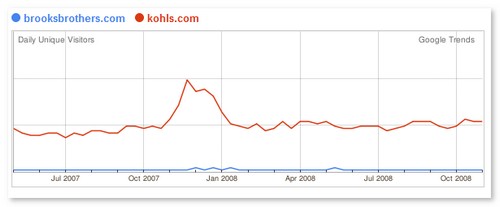
You could do a side by side comparison between the client and a more established competitor using Compete.com graphs. If they already rank for valuable terms, try to get them to track the business derived from those rankings, and show them the upside potential of increasing rank.

2. We'll Have To Redesign Our Site. That Costs Money

Quite possibly.

Try to demonstrate to the client that the potential benefits outweigh the costs. One way to price organic search traffic is to use the PPC prices as a guide. It could also be argued that organic listings have a higher trust level amongst users, making the traffic potentially even more valuable.

So how much is that poor design costing them in terms of lost opportunity?

3. SEO is Expensive

A common objection, usually made because the client can't determine the amount of work required, or the the value added.

Break down the work into separate tasks, and outline how long each task is likely to take. If the client knows your rate per hour, then they will be more able to determine if the cost is fair.

For example:

  • Industry analysis - research industry sector, marketing and sales trends.
  • Competition analysis - conduct review of competitor sites
  • Keyword research - research keyword terms
  • Site optimization, including title tags, meta tags, copy and internal linking
  • Link building/directory submission/social media promotion
  • Monitoring and reporting

Another aspect of this objection has to do with the value proposition. Again, try printing out the PPC bid prices for the same keyword traffic, and show how your work effectively undercuts that price. If you can, try and get information about how much the client spends on other channels, and do a side by side comparison of the relative merits, costs and benefits.

4. Upper management Won't Support It

Perhaps you need to be talking to the decision maker ;)

Ask what upper-managements objections would be? Sometimes this objection is legitimate, but it is often used to avoid having to tell you "no, thanks". The client cites an authority, who isn't present, implying that any further negotiations with the client will prove fruitless.

5. Why Should We Change The Way We Write Just For Search Engines?

This objection is commonly used by copywriters and journalists.

Established writers often use methodologies that don't take into account SEO. One way to get around this objection is to request a trail run on a few test pages. Once you're demonstrated that writing effective copy can result in an increase in visitors and conversions, you'll have more sway when it comes to changing the rest of the site.

Also, appeal to the copywriters vanity. If more people see their work, isn't that a good thing?

Cite "This Boring Headline Is Written for Google", an article about how The New York Times changed their writing practices to accommodate SEO.

"We're all struggling and experimenting with how news is presented in the future," said Larry Kramer, president of CBS Digital Media. "And there's nothing wrong with search engine optimization as long as it doesn't interfere with news judgment. It shouldn't, and it's up to us to make sure it doesn't. But it is a tool that is part of being effective in this medium."

6. SEO Doesn't Work. It's A Scam!

Ask the client why they feel this way. Has the client had dealings with SEOs in the past? Seen some bad press?

Have case studies on hand that demonstrate how you've solved search marketing problems in the past. Also provide recommendations from previous clients who were happy with your work.

Reframe the debate in terms of problems and solutions.

7. We Have A Strong Brand, So We Don't Need SEO

This is true, so long as people only search on the brand.

But what about those searchers who are searching for generic product/service names?

I once had this objection from a well-known childrens' clothes retailer. I ran a few search reports on generic searches, such as kids t-shirt, babywear, etc, and showed the client the traffic numbers. I then showed the client that their site wasn't appearing under any of those terms.

But her competitors were.

Why choose one or the other when you could easily have both?

8. We Like Flash. It's Cool!

Run away. Run fast..... ;)

Seriously though, such objections usually come from designers who place a lot of emphasis on site appearance, or want to play with the latest toys.

In the past, I've approached this in one of two ways. If they want to keep designing in Flash, or other technologies that make crawling and linking difficult, then suggest workarounds that don't affect the design. For example, create a print-friendly version of the site. This is the part of the site that gets crawled and seen by search engines and search visitors, while the designers can still focus on their elaborate designs. Essentially, you create a site within a site.

Show them that their competitors outrank them, in part, by using different technology. Is Flash really worth that competitive disadvantage?

From Google AdWords Blog:

Did you know that 20% of the queries Google receives each day are ones we haven’t seen in at least 90 days, if at all? With that kind of unpredictable search behavior, it's extremely difficult to create a keyword list that covers all relevant queries using only exact match."

It's even harder to capture that traffic using Flash.

BTW: Check out this example. Here is the spider's view of McDonalds.com.

9. Are SEO Services Really That Important?

Compared to.....?

It's an effort vs reward question. Again, if you can demonstrate clear commercial benefits over and above the cost, then "hell yes!". Try to focus on the clients business problems, and be prepared to demonstrate how the SEO spend will solve those problems in cost effective ways.

Those are a few common objections. I'm sure you've heard others. What is important to understand is that not all objections are legitimate. Most are stalling tactics used to delay making a decision. That decision is difficult to make because the client will expose themselves to risk.

Simply by being pre-prepared for objections, you help negate that risk, and can quickly move the client towards make a decision.


http://www.seobook.com/seo-sales-process-overcoming-common-seo-objections

Did Google Win the War on Paid Links?

Did Google Win the War on Paid Links?

Nov
24

Jim Boykin recently claimed to have kicked the paid links habit:

So, the best thing for my company to do, if we want to stay out of the fire, is to make sure that We Build Pages adheres to the Google Guidelines, and that means we won’t be getting any more paid links for manipulating search engines.

When I first got on the SEO scene and quickly started buying links, one of the sites I kept running into was WeBuildPages. One of my friends jokingly called me "the original link spammer" but Jim Boykin started buying links before I did and was doing it with more scale than I did. To see Jim dismiss link buying outright seems like it is either over-reaction or link buying is nearing its death.

Is Link Buying Nearing its Death?

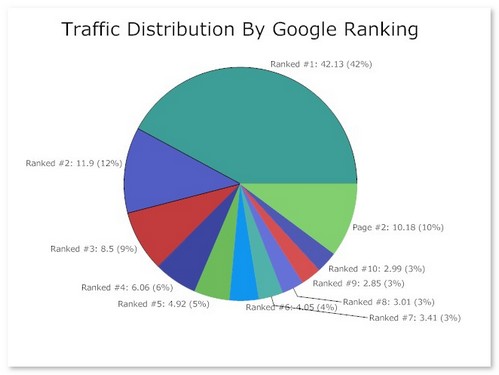
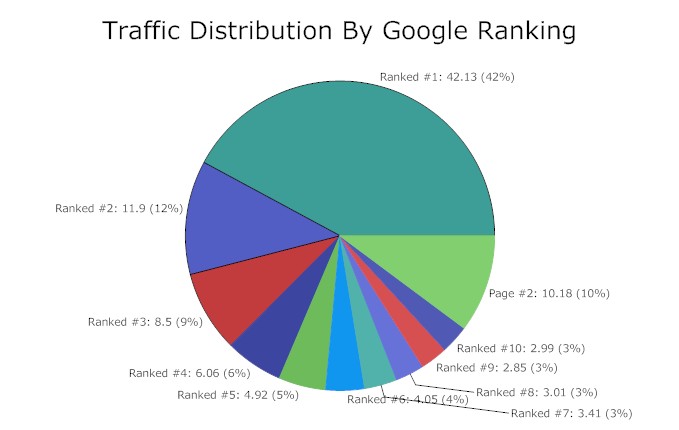
When search click distributions may end up similar to the below graph how can one not want to push the limits?

For some keywords (and some entire business models) one or two rankings difference can be the difference between a profitable business model and a money loser. Yes real businesses should not be so reliant on Google that Google can chose to kill them, but there are a lot more people doing business with me too offers than there are creative and original people offering significant value added services from a unique approach.

Most business models are arbitrage, and Google wants to claw away as much of the easy value as they can, forcing you to spend on brand building.

The Cost of Branding

Most traditional businesses are lucky to have a 10% or 20% profit margin. When one company controls 70% of the search market (closer to 90% in some niches and some geographic regions) it is easy for them to exert enough influence on a business (through quality scores, hand edits, threats) to move it from having 10% profit margins to losing money.

Many regional offline brands are dying because their cost structure does not work on a network of infinite competition.

Many online brands are money losers or break even at best, with some losing hundreds of millions of dollars before coming profitable. Some of the more savvy online companies (like Monster.com, Expedia, and BankRate) may break even on the brand and leverage the brand to build out profitable networks of thin websites that allow them to double or triple dip in the organic search results.

Death Grip Growing Stronger

Google's death grip on the web is only growing stronger. While the web and search are making some bulky business models (like that of the NYT) irrelevant, in response the New York Times publishes articles about how Google Seduces With Utility:

“The most powerful form of advertising is to be exceptional,” said Ranjit Mathoda, an investor and technologist who blogs at Mathoda.com. “Google has created an ecosystem that perpetuates itself by being useful.”
...
“We do have a philosophy that our products should speak for themselves. We tend not to make a lot of noise,” said Jeff Huber, senior vice president for engineering at Google.

Google is the front door to the web. And while Google is getting credited for "not making noise" and "being exceptional" they use their ad platform to give themselves free distribution in any vertical they want to compete.

Part of Google rising to such dominance was their aggressive bundling of their toolbar on computers through deals with OEMs and other software companies. Now that Google has a browser they want to take it one step further by doing Chrome distribution deals:

Sundar Pichai, Google Vice President, Product Management, revealed that Chrome will be ready to come out of “beta” testing by January, and that the search giant was looking at ways to make Chrome the browser of choice for the everyday user.

“We will probably do distribution deals,” he said, adding, “we could work with an OEM (Original Equipment Manufacturer) and have them ship computers with Chrome pre-installed.”

Chrome replaces the address bar with a search box. More search volume for Google.

Do You Still Buy Links? Do Your Friends?

Knowing how good Google is at marketing and that they are still gaining marketshare, do you still buy links? How has your link building and link buying strategy changed over the past year or two?

Subscribe to our blog via email or RSS to get more great posts like this one.

comments

Login or Register to post comments.

I think we will start to see less link buying as Google naturally devalues paid links, by making things like keyword rich anchor text more irrelevant.

But at the same time, smaller companies that don't have the cash flow for brand building will always look for that quick fix to compete with their larger competitors.

"we will start to see less link buying as Google naturally devalues paid links, by making things like keyword rich anchor text more irrelevant"

Should nt this be bad for G : resulting always the same sites in the SERPS ?

Paid links still work and always will as long as links remain central to Google's algorithm. They'll be forced farther underground every time Google takes steps to penalize link brokers. It's clearly a fringe tactic already, but I don't think competitive advantages arrive from being good little children and doing as Google says.

The risk is higher, but the value is still there.

I'm wondering: has Google taken steps yet to penalize the link buyer as opposed to the link seller? Their actions over the last year have all seemed to target the seller. If they target the apparent buyer, aren't they running the risk of falling to the ploy of one of the buyer's sneaky competitors? If they start doing that I'll happily buy some links for my competitors.

Hi Mike
I know of some cases where person X bought a bunch of links for person Y's site and got person Y's site torched by Google.

This is certain to rekindle the debate on what exactly does Google consider a paid link. Rand listed several methods on his site (SEOmoz.org) a few days ago. I believe all of them required some cash compensation, yet do not feel like a "traditional" paid link.

I don't know exactly how Jim's company was going about buying links, but there still seems to be plenty of link building opportunities without overtly renting links or paying for reviews that are acceptable (for the moment) to Google.

Interesting. I hadn't seen this happen myself - it seems a tricky situation for Google. How do they know who paid who for a link? I guess they can say, "we don't care who paid who," but that strikes me a destructive way to deal with the issue.

I would say that easy paid links are likely dead or dying. I don't think we'll ever see a true end to paid links, but perhaps Google's goal is containment rather than a total stomp-out.

I think that most sites that get whacked tend to be non-branded, of average quality, have little to no unique excellent content on them, etc.

On such sites if Google makes a mistake by whacking them then Google probably doesn't care. Also note that some sites are filtered out algorithmically...if someone buys you a ton of links with the exact same anchor text that can get your site hosed even without human intervention (though older and more authoritative sites are harder to knock down).

With branded sites having a large influential audience, does their stance change?

How about that Legal site which Oilman outed. They were caught, and caught large. But I can still see them rank well for many terms. It was probably for their big brand, or maybe because their parent company controls half the news circulating the globe.

Risks for real brands are fairly trivial in most cases. At worst they might get a slap on the wrists for a few days or weeks...after having got more than their share of traffic for months or years.

I stopped buying links last year. I worked with clients who wanted paid reviews, and I arranged them through sites like SponsoredReviews. I even made a special tool that would detect even the very slightest inkling of the blog having paid reviews or sponsored posts, and made sure they only bought posts on those blogs.

Regardless, Google obviously found all of those links. For all I know, Google already has their hand in SponsoredReviews and friends through back-door deals.

The upshot is - you don't know what Google has going on. They can spread FUD all day long, and actually, I've seen enough of my friends and clients have their sites delisted that I know I don't want to bother anymore.

In fact, I think I'm pretty dumb for doing it in the first place. It's against everything I preach about adding value to the web.

For the last year or so, I've got links by creating useful content and tools and people have linked to me for that reason.

Sure, it's slower and harder. But you don't appreciate anything you didn't work hard to get.

My 2 euro cents :)

Also, I just used the "subject" line on this comment box for the first time.

Where does that show up? :)
What is the point of it?

The subject appears in the right column for the 10 most recent comments.

@renesisx.

Do a page search for the "subject" line you wrote and you will see that.

These are still the early days of the net and for Google, so I would put my efforts in abiding my Google's preferred methods for long term success.

Hi Aaron. Where did the data come from to build the "Traffic Distribution by Google Ranking" pie chart? No source is noted...

So what about the little guy who has a love for, and expertise in, his niche, but his niche is overcrowded with fluff already?

How then is it fair that sites with no value seem to rank so well in this niche, and not get caught or outed?

Should we stand by the side while a huge collection of profit is left on the table?

I tend to disagree slightly with this Google methodology of outing one another and ceasing the purchase of paid links. After all, how else does the little guy compete with the larger players? Bringing something unique to the table isn't always as easy as thinking up a new idea. In most cases, it takes a large percentage of profit. Profit that can be easily garnered once one makes it to the top. I also agree with MikeTek's statement, "Paid links still work and always will as long as links remain central to Google's algorithm."

Well if you are the guy who has love for the niche then...

  • they should be able to bring something unique to the table
  • they probably are not driven by money
  • eventually the cream will rise to the top (though short term buying a few links can give them a bit of a boost)


http://www.seobook.com/did-google-win-war-paid-links

Thursday, November 20, 2008

InLinks.com - TLA Launches In Links, an Inline Link Buying Program

InLinks.com - TLA Launches In Links, an Inline Link Buying Program
Nov
19

Just in time for the holidays, Media Whiz's Text Link Ads launched a new links product named InLinks, which puts text links inside the content of sites powered by Wordpress, MovableType, and Drupal. Rather than links sticking out like a sore thumb by putting a rail of paid links in the sidebar or footer (the old text link brokering model) this allows for a more efficient marketplace that is more likely to pass link juice and be a bit harder to detect.

Link Location Matters

Yahoo! Search's Priyank Garg highlighted that they look at link location when determining the value of links:

The irrelevant links at the bottom of a page, which will not be as valuable for a user, don’t add to the quality of the user experience, so we don’t account for those in our ranking. All of those links might still be useful for crawl discovery, but they won’t support the ranking.

As Jim Boykin would say, you want links within content linking to content.

Does Google Like This?

Matt Cutts was quick to say that this link buying program violates Google's TOS (and might be against an FTC guideline), but Shoemoney highlighted how Google is known to look the other was on such decisions when it is profitable to do so.

Every time paid links is brought up Matt Cutts brings up the FTC’s “suggestions” on bloggers disclosing things they have been compensated for. In no where in these “suggestions” does it talk about paid links. But even if it did they are just suggestions. They are not law and if Google was following the FTC’s suggestions I doubt Google Adsense/adlinks would be engaging in some of the most deceptive advertising methods I have ever seen on the internet.
  • Google promotes infidelity.
  • When Google launched their affiliate program, you could only tell that the blended inline text links were affiliate if you read a small blurb when you scrolled over them.
  • Some AdSense ad units do not even have the word ad near them...one commenter thought people could think a blog was promoting/endorsing homosexual fitness dating because there was no disclosure.
  • This entire page is a Google advertisement with no disclaimer on it

It appears Google needs to clean up its own act before people will take that FTC comment seriously.

Should You Buy Text Links?

Quoting liberally from Bob Massa's great blog post on link buying:
Invariably I get the question, SHOULD I BUY LINKS?

Wanna know the funny thing? Most of the people who ask me that question are the people who least need to worry about the risk. The risk motivating the question being whether or not they may be penalized by google instead of the risk being about going broke.

Logic would dictate that anyone concerned about the risk of being penalized by Google, is actually worried about losing something they already have. In this case sales coming from targeted traffic generated from superior organic placements in the SERP’s. Fine, that makes sense as that is pretty much the definition of risk. Losing what you already have or at least losing a perceived opportunity that you have already made an investment in, (which was a calculated risk the minute a decision was made to put up a webpage and long before this question ever came up).

But far more often than not, when I take a look at the site belonging to the askee, I see a site that looks like a third graders ransom note and written by a Marlon Sanders school of “But Wait – There’s More” drop out with a title tag that reads, index-Mozilla Firefox.

Little traffic to speak of and certainly no sales to lose. There is VERY little visible investment in design, content or anything else. Yet they brag of the #3 spot they have for a keyword with over a million results like that is all they need for proof of their valuable contribution to the world of online commerce.
Read more of Bob's wisdom at Should You Buy Links? The Truth Shall Set You Free

How to Buy Links Safely

I spoke to some folks at Text Link Ads who said that the InLinks inventory is separate from their traditional old-school link inventory.

Is this new network on Google's radar? Absolutely, but then what did Google expect when they only penalized one link broker while letting all the others rank? In doing so, Google made their fighting paid links program much more difficult to manage.

Might they catch some publishers? Sure, especially if they are greedy, aggressive, and use little to no editorial oversight. But some will do it smartly, and for most advertisers the risk is minimal so long as you use it lightly...many of these sites are well ingrained into the web, with thousands of legitimate inbound and outbound links.

Most search traffic goes to the top few ranking results. I wouldn't use this type of linking program to try to go from #103 to the first page, but if you are ranking #8 or #12, buying a few of these links might be all you need to capture a profitable top Google ranking.

Save $100 Today

Join inLinks and get $100 off your order by using the code 100free. Try it out, see if you like it, see if it works for you, and cancel if you don't see the movements you were expecting.

Subscribe to our blog via email or RSS to get more great posts like this one.

comments

Login or Register to post comments.

As newportseo's link shows, it would be easy to sign up to inlinks as one of your competitors, spend $10 (or whatever the minimum is), then report the link to Google a week later saying you think it's a bit shady, it might be a paid link. What do Google do? Ban your competitor?

How can Google know exactly WHO has commissioned such links? That is the key question. It's not that a link simply exists that was paid for, but WHO paid for it. When links are cheap (and they are), then it's profitable to watch your competitor's rankings slide as you frame them with paid links.

I can't stress this enough: it's not enough for Google to recognise a paid link, they need to confirm (beyond all doubt) WHO paid for it. It would be far worse to penalise sites for paid links that the owner didn't actually pay for (a competitor did) than leave them alone.

I wonder how Matt Cutts would explain how Google knows who paid for a link.

This act of TLA has suddenly started a kinda debate among top pro-bloggers. Some are in favor some not!

...this allows for a more efficient marketplace that is more likely to pass link juice and be a bit harder to detect.

It seems it has more to do with passing link juice, than actually getting a visitor to a site.

My only concern is that an advertiser will have little or no control over the sites that will contain the links.

Of course if you are not an Adsense publisher, this is a new mean of testing various ways of making money from your blog/site.

Of course if you are not an Adsense publisher, this is a new mean of testing various ways of making money from your blog/site.

If I had to guess this will skew Google toward placing even less trust on fairly new links on low PageRank blog entries...this way the advertiser would be forced to eat a good bit of cost before seeing return. But other blog link networks like Blogsvertise clearly work still...so this battle might have a bit to play out.

From the Techcrunch article there's some interesting links regarding ads not being advertised as ads, might be worth a read for UK SEO's:

http://www.opsi.gov.uk/si/si2008/uksi_20081277_en_5#pt11

US SEOs:

http://www.ftc.gov/os/2008/03/P064101tech.pdf

European SEOs:

http://ec.europa.eu/consumers/rights/index_en.htm

Might help inform a few decisions on the law and links.

Does anyone know of anyone that has actually been done by the law (not Google) for not advertising ads as ads online...I just don't see how it could be enforced on any sort of widespread scale...


http://www.seobook.com/in-links-launches